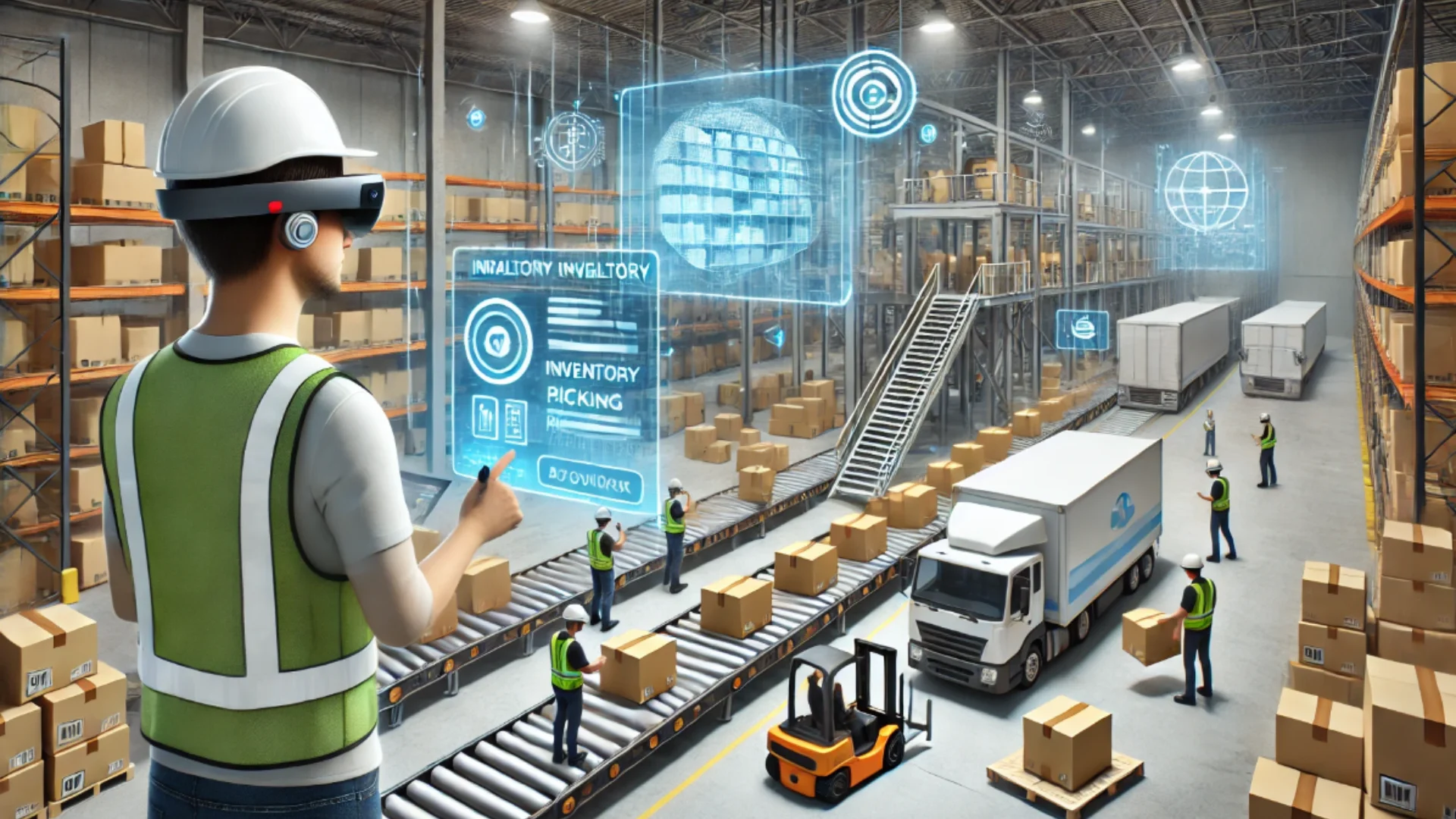
Let’s be honest—terms like “spatial computing” and “augmented reality” can sound like science fiction. You might picture sleek, futuristic headsets and flashy digital overlays. But here’s the deal: the sci-fi phase is over. This technology has quietly matured into a powerful, practical tool for businesses. It’s moving from the marketing demo reel to the factory floor, the design studio, and the retail showroom.
And the real question isn’t “What is it?” anymore. It’s “What’s the return on investment?” Well, let’s dive in. We’re going to look past the wow factor and examine where spatial computing and AR are delivering real, measurable value right now.
From Assembly Lines to Operating Rooms: Core Business Applications
Forget gimmicks. The true power of spatial computing lies in its ability to overlay critical information onto the real world, right where your eyes—and hands—need it. This is changing workflows in some pretty fundamental ways.
1. Supercharging Training and Skill Development
Training is expensive. And risky, especially for complex or dangerous tasks. Spatial computing creates a safe, repeatable, and incredibly effective training environment. Think of it like a flight simulator for everything.
A technician learning to service a jet engine can see animated, step-by-step instructions overlaid on the actual machinery. They can practice virtual welding with perfect feedback. The learning curve shrinks. Mistakes happen in a zero-consequence space. Companies like Boeing and Siemens are already seeing training times reduced by up to 40% and retention rates skyrocket. That’s a direct impact on productivity and safety.
2. Revolutionizing Remote Assistance and Field Service
This is a game-changer. A field engineer stuck on a tricky repair no longer has to squint at a manual or try to explain a problem over a shaky video call. With AR-enabled smart glasses or a tablet, they can share their live view with an expert thousands of miles away.
That expert can then draw arrows, highlight components, and pin 3D diagrams directly into the technician’s field of view. It’s like having a world-class specialist looking over your shoulder. The result? First-time fix rates improve dramatically, average repair times drop, and travel costs for specialists plummet. The ROI here is almost immediate—fewer truck rolls, happier customers, less downtime.
3. Transforming Design, Prototyping, and Collaboration
Imagine reviewing a life-size 3D model of a new product prototype on your actual conference table. Or visualizing how a massive piece of industrial equipment will fit into a factory layout—before the concrete is poured. That’s spatial design review.
Teams scattered across the globe can collaborate in a shared virtual space, manipulating digital models as if they were physical objects. This catches design flaws early, saves a fortune on physical prototypes, and accelerates time-to-market. It bridges the gap between the digital blueprint and the physical reality, which has always been a costly gap.
Calculating the ROI: It’s More Than Just Dollars
Sure, you want to see the numbers. But the return on investment from spatial computing isn’t just a line item for reduced travel. It’s a compound effect of several hard and soft benefits. Here’s a breakdown of the key ROI drivers:
| ROI Driver | Tangible Impact | Intangible Benefit |
| Enhanced Productivity | Faster task completion, reduced downtime, fewer errors. | Empowered workforce, reduced cognitive load. |
| Reduced Costs | Lower travel, fewer physical prototypes, less waste. | Optimized resource allocation, sustainability gains. |
| Improved Quality & Safety | Higher first-time fix rates, fewer defects, fewer accidents. | Stronger brand reputation, higher customer trust. |
| Accelerated Innovation | Faster design cycles, quicker time-to-market. | Competitive advantage, culture of innovation. |
To put it simply, the business case often stacks up quickly in asset-intensive, knowledge-dependent, or logistics-heavy industries. A well-deployed AR remote assist solution, for instance, can pay for itself in a matter of months through saved travel and improved efficiency alone.
The Human in the Loop: Adoption and Practical Realities
Now, it’s not all plug-and-play magic. The technology is ready, but the human element is key. Success depends on thoughtful integration. You can’t just drop headsets on your team and expect miracles.
Start with a clear pain point. Is it the 30% callback rate for service visits? The six-week training program for new hires? Pinpoint that, and pilot a solution there. Choose user-friendly hardware—sometimes a rugged tablet is better than a full headset. And critically, involve your frontline people in the process from day one. Their buy-in is the real make-or-break factor.
The good news? The barrier to entry is lower than ever. You don’t need a team of PhDs. Cloud-based AR platforms allow companies to create and manage their own digital content and instructions—what some call “digital work instructions”—without deep coding expertise.
Looking Ahead: This is Just the Foundation
What we’re seeing today—the guided instructions, the remote expert eyes—is just the first chapter. This is the foundation. The next wave is about context-aware intelligence. Imagine your spatial computing system not just showing you a manual, but understanding the task, the environment, and the parts in front of you. It could proactively warn of a potential misalignment or suggest an optimized workflow based on real-time data.
It’s moving from being a fancy display to being an intelligent partner. That’s where the long-term, transformative ROI lives. It’s in creating a seamless layer of digital intuition over our physical work.
The narrative has shifted. This isn’t about chasing a trend. It’s about solving old, expensive problems with a new kind of clarity. The businesses that are winning aren’t just using spatial computing as a toy. They’re weaving it into the fabric of their operations, turning information into action, and distance into irrelevance. And honestly, that’s a return that’s pretty hard to ignore.